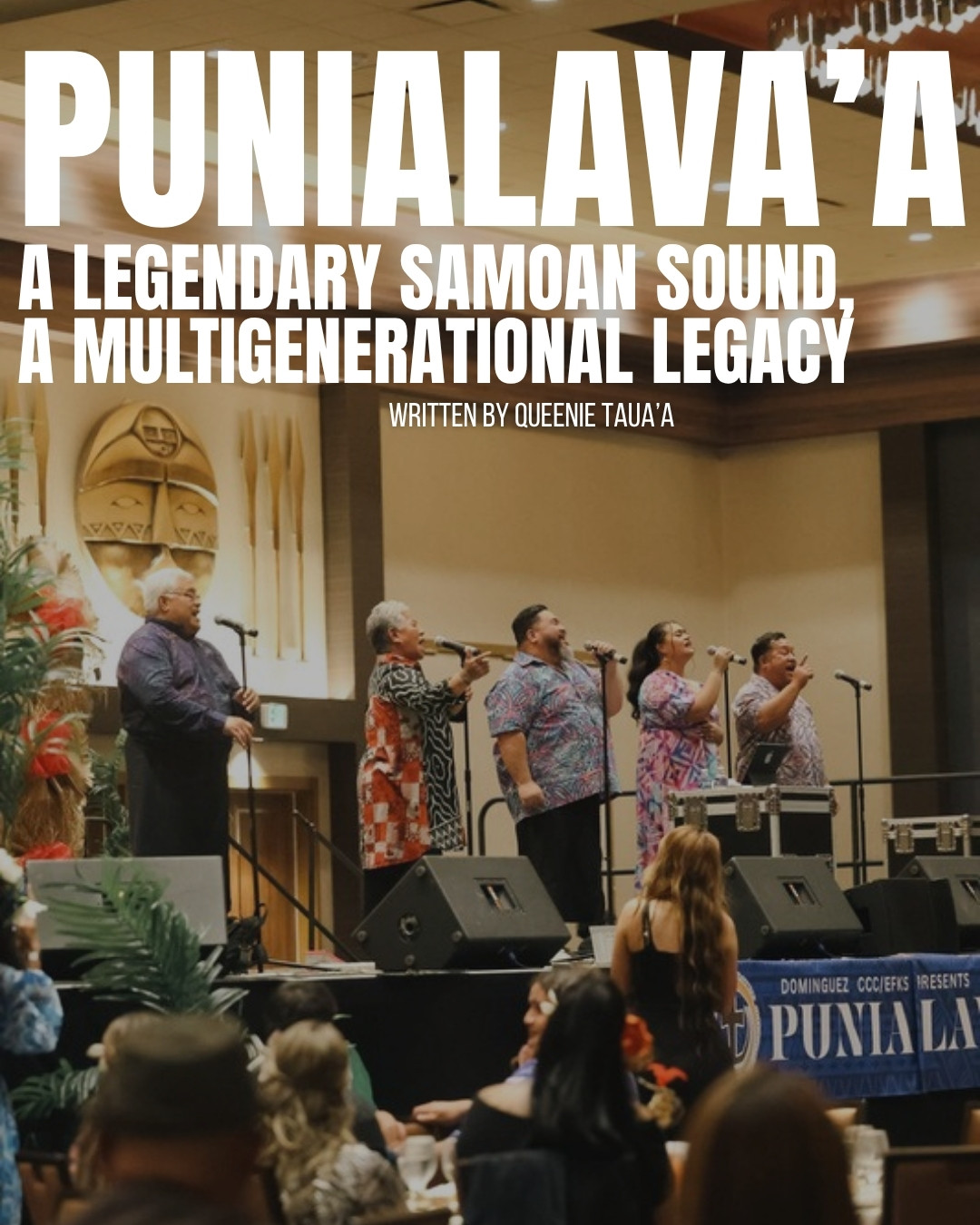
PMN+ recently had the chance to sit down with Nanai, Puni, and Melody, the children of Lale Peteru, founding member of the legendary Samoan band Punialava'a. As the next generation carrying forward a legacy that has spanned decades, they are more than just musicians, they are custodians of culture, language, and family tradition. Their story is one of passion, pride, and perseverance, showing how music can bind generations together while inspiring new ones, both in Samoa and across the global diaspora.
For over fifty years, Punialava'a has been more than a band, it is an institution. Known and loved in villages, towns, and cities, the name evokes a sense of home, community, and identity. Now, as Nanai, Puni, and Melody continue the journey started by their father, they carry with them the responsibility of honoring a tradition that is larger than themselves. From the sacred malae in Vailele to stages across the world, their music remains a bridge between past and present, between Samoa and its children living abroad, and between generations who have grown up with its songs.
This is not just a story about music. It is a story about family, heritage, and the enduring power of song to preserve a people's language and culture. And sitting with Nanai, Puni, and Melody, it quickly becomes clear that the heartbeat of Punialava'a still pulses strong through this next generation, spirited, proud, and unstoppable.
Punialava'a
In the heart of Samoa, where the gentle sway of coconut palms meets the rhythm of island life, a name has echoed across generations: Punialava'a. Since 1968, this iconic band has not only shaped Samoan music but has become a living emblem of culture, family, and community, a legacy born from the vision of Lale Peteru, the founding father whose melodies still resonate today.
The name itself carries the weight of legend and place. Hailing from the village of Vailele, “Punialava'a” is derived from the local malae, the sacred gathering ground. But it's more than geography. In Samoan lore, one must pay tribute to the ocean's demigods when crossing the waters of Vaimauga. Here, “Puni” means block, “Ala” is route, and “Va'a” is boat. Put together, Punialava'a: block the route of the boat unless you pay tribute. Melody, one of the band's current torchbearers, reflects:
“Punialava'a is the name of our malae in Vailele, our dad's village, but as our mom and dad both say, Punialava'a, our band isn't just for Vailele, it's for all our other villages, it's for everywhere we're from. Punialava'a is just a representation of us and our family.”
For Puni, music isn't just heritage, it's identity. Named after the band itself, he grew up with Punialava'a coursing through his life.
“Punialava'a means everything, it's pretty much my whole life… growing up with Punialava'a to carry the name is very important for me to represent who I am, where I'm from, our culture, our family.”
A Family Rooted in Music
For the Punialava'a siblings, Nanai, Puni, and Melody, music has been woven into every aspect of their upbringing. Melody recalls the constant presence of music in their lives: home, church, family gatherings.
“With my musical journey, I'm just trying to strive to somewhat get close to the level of Punialava'a and the name they built from the beginning. It's high, it seems very impossible, but it's very fun.”
Puni echoes this sentiment, highlighting the formative lessons from their father. “Punialava'a plays a huge part in my music journey… learning music from a very young age makes me grateful.”
“Our parents really wanted us to learn music and understand what we are doing in the music game. Mom and dad are my inspiration behind the music.”
His journey evolved as he studied in New Zealand, writing English music but ultimately embracing Samoan songwriting, a nod to their father's legacy as a Samoan singer and songwriter.
Nanai describes the family's influence as foundational.
“They're the pillar of me personally, of my knowledge in music. My parents taught us everything with lyrics and music in general. I was singing since I was 3 years old, and we are still here now. I am still learning up until now, and I don't know what I would do without them as far as parents and as music goes, they are very important to my life and to our music.”
Homecoming and Cultural Connection
In 2022, following the easing of COVID restrictions, the siblings returned to Samoa to perform at a free concert behind Friendship Park, a moment Melody remembers as surreal.
“Being able to see our people there, hearing them sing to us, made me very emotional… being next to my siblings and my parents, but especially being in our home country of Samoa and singing to and with the people… it was amazing.”
Their music is not just performance; it's a vessel for cultural preservation. Nanai explains:
“Our language is our identity. When it's used in music, it continues the focus on preservation of language, and therefore culture. We want the younger generation to hear our music, be curious, and ask their parents what the song means. That triggers the beauty of our language and a desire to learn and understand it.”
For Nanai, the connection extends beyond borders. Even though his children are born in New Zealand and are still learning Samoan, he sees music as a bridge linking heritage, identity, and pride.
“When my son sees all the Samoan people walking the streets, wearing blue jerseys, Toa Samoa or Manu Samoa, it makes him happy and proud of his heritage.”
Music as Lifeblood
Melody's life has been inseparable from song. “Before concerts, before we perform, I get nervous, but listening to my favorite songs helps calm me down.” Growing up in New Zealand, she notes, she didn't experience Samoan culture as directly as her siblings, but music helped her feel grounded, connected, and closer to her roots.
Puni emphasizes their role in connecting the diaspora.
“It feels good knowing people reach out to thank us for our music for helping Samoans in the diaspora connect to their language, which ripples to their culture and identity. It's a huge blessing and honor to know that our music is there to help our people and our community learn about our culture and language. Every Samoan is proud to be Samoan, and having our music help others connect is very special.”
A Legacy Continued...
From a malae in Vailele to audiences across Samoa and the diaspora, Punialava'a remains a symbol of multigenerational pride, cultural preservation, and musical excellence. The siblings carry forward a name that is larger than themselves, ensuring the rhythm of their people's identity continues to play loud, proud, and eternal.
“We are incredibly proud to keep making music, keep our culture alive, and keep it coming,” Puni says. And with that, the legacy of Punialava'a marches on an undying melody woven into the heart of every Samoan it touches.
Images provided by the featured individuals or sourced from their public social media profiles and online platforms. All rights remain with the original creators. Originally published in PMN+ Magazine, September 2025 (Vol. 2 No. 9).
September 2025 · Digital Magazine